Monday, October 6, 2008

Anything can be poetry


Even with the title of the piece being as vaguely formulated as the succeeding lines, it is easy to argue why “In a station of the Metro” is in fact a poem. Written by Ezra Pound, “In a station of the Metro” contains fourteen words – five nouns, two adjectives, and a ghostly absence of verbs. There is no rhyme and no obvious meter. These are the precise reasons why the piece can be interpreted as a poem. The simplicity of the poem leaves it wide open for interpretation. Meaning can be found even in the punctuation, as the first line is ended in a semi-colon. Words full of meaning such as apparition, petals, and bough are used. The vagueness and simplicity of the poem itself lends to its literary merit.

The first line of the poem reads “The apparition of these faces in the crowd;” The use of the word apparition is important to note. Apparition gives a ghostly, almost phenomenal feel such that the faces vividly appear into the image. By using the word apparition, the author creates a powerful mental feeling using a simplistic word. The line ends with a semicolon, indicating that the next line will talk about the first line. The use of imagery and diction in this line lends to the proof that the work is in fact a piece of poetry.

The second line of the poem reads “Petals on a wet, black bough”. Here, the author introduces the first positive word: petals. Moreover, the author uses a metaphor to further elaborate on the faces mentioned in line one. The words attributed to the bough are wet and black, painting a vivid image of a flower petal against a branch. The imagery here allows the readers to further interpret what the author saw at the metro. These elements lend evidence to the claim that “In a station of the Metro” is in fact a poem.


Wednesday, October 1, 2008

Imagery in Casabianca

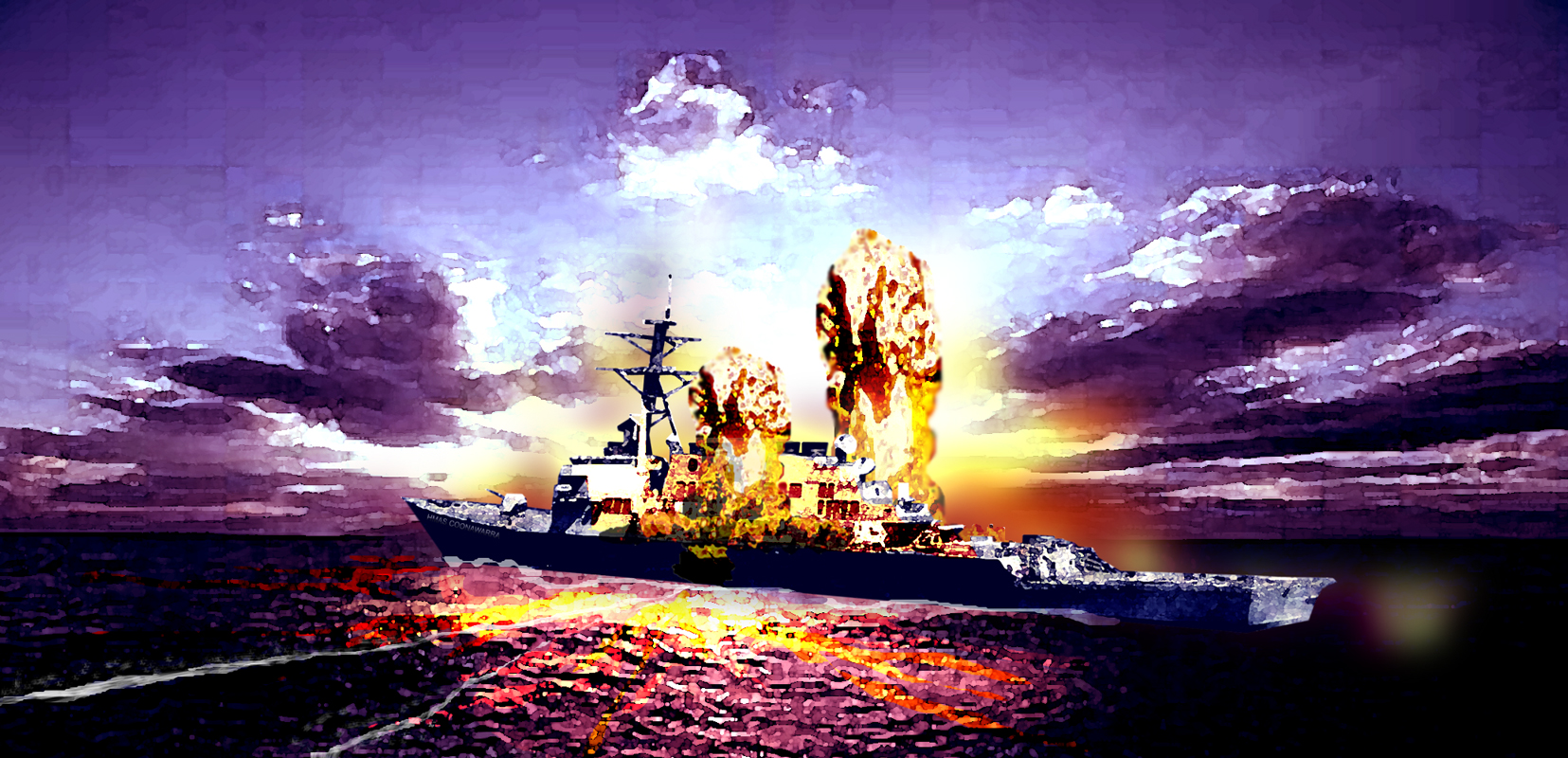
Heman’s poem “Casabianca” narrates the story of a brave boy caught in a battle in the sea. The boy refuses to leave without the permission of his unconscious father, and the ship eventually explodes. Herman uses powerful imagery to describe the situation around the boy and his impending doom. An obvious recurring image in the poem is the progression of the fire that engulfs the ship. This recurring image dominates all other images in the poem, and the descriptions and progression of the fire adds significant meaning to the poem.

The first stanza illustrates Casabianca standing on a burning deck, but here the fire is not depicted as dangerous. Instead, the fire merely illuminates the scene. It is interesting to note that out of the four lines in the stanza, three of them mention and/or describe the fire. The next stanza describes Casabianca, using words such as “beautiful and bright”, drawing comparison to the fire from the last stanza, that “shone round him o’er the dead”. In the third stanza the fire begins to threaten, as Herman writes, “The flames rolled on - - he would not go”. Like the flames that perservered, Casabianca would not leave. Over the fourth and fifth stanzas the imagery of the fire is faded into the background, until the last line of the fifth stanza, where the fire simply rolls on. I found that the absence of the imagery that was so prominent earlier in the poem left me more worried and thinking about the flames than I would have if the imagery was present. Here, Heman draws attention to the flames by not mentioning them.

In the sixth stanza the flames are personified, and for the first time in the poem Casabianca is depicted as noticing the flames. Casabianca can feel the heat of the flames upon his brow and hair. Over the next two stanzas the flames reach their peak intensity. The flame first spreads to the sail and shroud in the seventh stanza, intensifying the feeling of despair. In the eighth stanza the fire reaches its peak, engulfing the Casabianca as he stands bravely awaiting the orders of his father. The progression of the flames throughout the poem mirrors the progression of Casabianca’s despair. The flames give the readers a way of interpreting the progression of the impending doom of Casabianca, and thus lets Casabianca remain a brave character.

Images:

Casabianca:

Design:


Diving into the wreck:

Monday, September 29, 2008

Power

“Words, without power, is mere philosophy”

Sir Muhammed Iqbal, who lived from 1877 to 1938, was a poet, politician, and is a personal role model of mine. Born during the British occupation of India, Iqbal is often considered one of the greatest poets of both his time and region. Writing in both Urdu and Farsi, his works eventually earned him Knighthood. Beyond his poetry, Iqbal is commonly attributed to the revival of Islamic political power in the East, particularly India. Iqbal envisioned a separate, Islamic state located in the northwestern regions of India, dedicating his literary and political career towards his vision.

Iqbal is not a personal role model of mine because of his politics or for the ethnicity we both share, but rather is my role model because he used a strength of his, poetry, to captivate and motivate the hearts of millions of Indian Muslims living in his time. Iqbal, along with Muhammed Ali Jinnah, is considered to be one of the founding fathers of Pakistan, and had success using his literary merit to achieve his goals. The title of my blog was a famous quote from Iqbal. Iqbal realized that at the end of the day, words were just really words, and without power they would be useless. Iqbal gained his power by captivating his followers with his words. His poetry was not just words, they were a political force that shaped the past, present, and future lives of millions of people. Being an Electrical Engineering major who passed out of any English requirements with the AP exam, I do not need to take this class. In fact, I do not like reading and writing. But like Iqbal, I realize that academic merit is often necessary to make an impact in the world. Through this class, I hope to gain the skills that will make my words powerful, not just mere philosophy.