Robert Frost’s Design is often regarded as the poet’s affirmation of a classical view of God and intelligent design, cuing in on the innocent design of life and death in nature. From the use of pure, white imagery, Frost paints death in nature as innocent design of God. Further reading of the poem however reveals dark subtleties that allude to certain negative attitudes on life. Analysis of these subtleties lead to an unusual reading of Frost’s poem: that Frost is musing on the inevitable negativity in both nature and life, in particular hopelessness that is found in nature and reiterated in life.
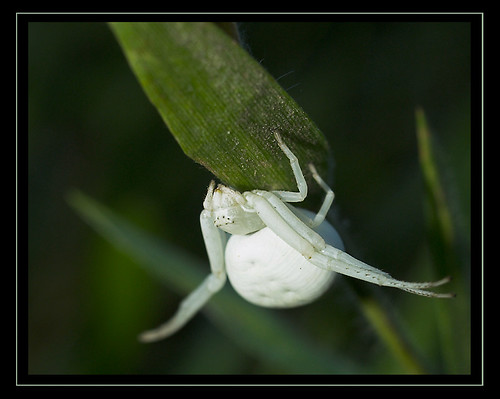
Design begins with describing a scene in nature. A fat, white dimpled spider is on a white heal-all, holding up its prey, a white moth. On first inspection, the repeated use of the color white seems to portray a sense of purity throughout the scene, from the spider to the flower to the moth. Within these three lines however there are several dark undertones that must be noted. The heal-all, a flower that is known to blossom blue, is white. A flower named heal-all is in a way sick. It is not able to even heal itself, yet is called “heal-all”. This irony is extended in the fact that this scene of death occurs on a flower that is supposed to heal, not serve as an accessory of death. Another dark undertone is the depiction of the circle of life. Here, the spider must kill and end the life of the moth in order to continue living itself. Frost seems to be alluding to a certain sense of negativity. Frost brings up the idea of the inherent, unavoidable evil that is apparent in nature.
Through the next five lines, Frost continues his use of negative undertones. The three characters mentioned in the first three lines are describes as being mixed like the “ingredients of a witches’ broth”. The spider is now an ingredient, the flower is now bubbly-froth, and the moth is described as “dead wings carried like a paper kite”. The description of the white moth as dead wings sounds almost like a fallen angel, and the use of “paper kite” makes the moth sound almost like a toy of the spider’s rather than just the sustenance needed to survive. Frost describes the event as being conjured by a witch. We see a shift from white, pure, imagery to a dark, evil imagery. These lines depict a twisted view of nature, where a seemingly “pure” event is evil under the surface. Consequently, these lines expand on the inherent negativity in nature.
In the next four lines, Frost uses pointed questions to paint a bleak picture. Frost asks, “What had the flower to do with being white” (9). With this question, Frost points to the fact that the flower had no choice in the events that occurred. In lines 11 and 12, Frost creates the sense of inevitable coincidence, that the preying of the moth by the spider was a hopeless, unavoidable situation. The moth is mysteriously steered towards the location of the spider, and thus dies in the process. Frost creates a string of events where none of the actors had a choice in – that the events were all a series of hopeless coincidences.
The last two lines of the poem read, “What but design of darkness to appall?--/If design govern in a thing so small”. Ending this poem, Frost states that only the design of darkness should be appalled as it happens even in small things. Even in closing the poem, Frost offers no hope to the readers. He ends the poem saying that darkness is designed – inevitable and unavoidable. While the lines can be read differently depending on the context, in the context of negativity these lines are read as a continuation of the theme of hopelessness in Design.
Another aspect to play close attention to is the pattern of inversion throughout the poem. Instead of a black spider, Frost presents a white one. A white heal-all where a blue one is expected. The design of the poem is itself inverted as well. Though the poem is structured as a sonnet, Frost asks questions in the end of the poem and offers no solution, whereas in classical sonnets a problem is posed and solved in the conclusion of the sonnet. The absence of a solution and the inversion of expectations creates a feeling that what should happen will not. This plays into the theme of hopelessness present throughout this poem.
Frost wrote and published this poem in 1936. It is critical to note that just two years prior to this—in 1934, Frost’s youngest child died after giving birth (Reuben). Because Frost’s life was full of tragedy, it is hard not to conclude that Frost’s personal life was indeed factored into his work. The premature death of Frost’s daughter is mirrored in the negativity in the poem. Like Frost’s daughter, the hopeless moth had no choice to live or die, yet it simply dies as a part of its life. Dark messages like these are repeated throughout the lines of the poem, and lend proof to the idea that Frost’s Design is really a reiteration of what Frost saw in real life: hopeless, bleak, inevitably evil strings of events.
Citation:
Reuben, Paul P. "Chapter 7: Robert Frost." PAL: Perspectives in American Literature- A Research and Reference Guide. URL:http://www.csustan.edu/english/reuben/pal/chap7/frost.html
Monday, October 20, 2008

Thursday, October 16, 2008
The draft I forgot to post
On Design
Salman Ahmed
Robert Frost’s Design is often regarded as the poet’s affirmation of a classical view of God and intelligent design, cuing in on the innocent design of life and death in nature. From the use of pure, white imagery, Frost paints death in nature as innocent design of God. Further reading and analysis of the poem however reveals dark subtleties that allude to a certain idea of a dark, cynical design. The analysis of these subtleties leads to the idea that the poem is musing on the hopelessness of natural life and the lack of choice in destiny.
Design begins with describing a scene in nature. A fat, white dimpled spider is on a white heal-all, holding up its prey, a white moth. On first inspection, the repeated use of the color white seems to portray a sense of purity throughout the scene, from the spider to the flower to the moth. Within these three lines however there are several dark undertones that must be noted. The heal-all, a flower that is known to blossom blue, is white. A flower named heal-all is in a way abnormal—sick. It is not able to even heal itself, yet is called “heal-all”. This irony is extended in the fact that this scene of death occurs on a flower that is supposed to heal, not serve as an accessory of death. Another dark undertone is the depiction of the circle of life. Here, the spider must kill and end the life of the moth in order to continue living itself. A sense of hopelessness is portrayed by Frost in these opening lines.
Through the next five lines, Frost continues his use of negative undertones. The three characters mentioned in the first three lines are describes as being mixed like the “ingredients of a witches’ broth”. The spider is now an ingredient, the flower is now bubbly-froth, and the moth is described as “dead wings carried like a paper kite”. The description of the white moth as dead wings sounds almost like a fallen angel, and the use of “paper kite” makes the moth sound almost like a toy of the spider’s rather than just the sustenance needed to survive. Frost describes the event as being conjured by a witch. This argues the idea of an all-benevolent God, and rather the idea of an evil witch planning this act of nature. The innocent act of nature can now be read as an unnecessary, dark and evil event.
The next lines of the poem pose a series of questions designed to affirm the innocence of the characters in the scene. Since the characters are all innocent in the scene, the questions beg to reader to explore the idea that since the evil act was not a fault of the spider, flower, or moth, then the evil act was the fault of the design. A sense of hopelessness is reiterated in first four lines of the sestet. The flower had no choice in being white, and the moth is somehow driven to where the white spider so happened to prey. Frost is again questioning the idea of choice in life and the dark undertones suggest a bleak view of everyday life reflected in nature.
The structure of the last two lines leaves the couplet completely open to interpretation. The lines can be read in multiple ways. In one reading, Frost could be suggesting that if design is present in such small parts of nature, then darkness should not be questioned and should rather be accepted as it is in nature. Another reading is that we should not be shocked by darkness in life as it is apparent even in nature. A third, and more plausible reading given the negative undertones in the poem, is simply a sarcastic musing of Frost, that the darkness apparent in nature can also be reflected in things that are not so small.
Another aspect to play close attention to is the pattern of inversion throughout the poem. Instead of a black spider, Frost presents a white one. A white heal-all where a blue one is expected. The design of the poem is itself inverted as well. Though the poem is structured as a sonnet, Frost asks questions in the end of the poem and offers no solution, whereas in classical sonnets a problem is posed and solved in the conclusion of the sonnet. This absence of solution and the inversion of what the reader would normally expect plays into the theme of hopelessness.
Frost wrote and published this poem in 1936. It is critical to note that just two years prior to this—in 1934, Frost’s youngest child died after giving birth. Frost’s life was actually full of tragedy, and the reader cannot help but wonder if Frost’s personal life was indeed factored into his work. Taking this knowledge into account, Frost’s Design can be read as the cynical comm.;entary of life by Frost. The hopeless moth had no choice to live or die, yet it simply dies as a part of its life. These dark messages are repeated throughout the lines of the poem, and lend proof to the idea that Design is really a commentary on the evil present in the world by using evil present in nature.
Salman Ahmed
Robert Frost’s Design is often regarded as the poet’s affirmation of a classical view of God and intelligent design, cuing in on the innocent design of life and death in nature. From the use of pure, white imagery, Frost paints death in nature as innocent design of God. Further reading and analysis of the poem however reveals dark subtleties that allude to a certain idea of a dark, cynical design. The analysis of these subtleties leads to the idea that the poem is musing on the hopelessness of natural life and the lack of choice in destiny.
Design begins with describing a scene in nature. A fat, white dimpled spider is on a white heal-all, holding up its prey, a white moth. On first inspection, the repeated use of the color white seems to portray a sense of purity throughout the scene, from the spider to the flower to the moth. Within these three lines however there are several dark undertones that must be noted. The heal-all, a flower that is known to blossom blue, is white. A flower named heal-all is in a way abnormal—sick. It is not able to even heal itself, yet is called “heal-all”. This irony is extended in the fact that this scene of death occurs on a flower that is supposed to heal, not serve as an accessory of death. Another dark undertone is the depiction of the circle of life. Here, the spider must kill and end the life of the moth in order to continue living itself. A sense of hopelessness is portrayed by Frost in these opening lines.
Through the next five lines, Frost continues his use of negative undertones. The three characters mentioned in the first three lines are describes as being mixed like the “ingredients of a witches’ broth”. The spider is now an ingredient, the flower is now bubbly-froth, and the moth is described as “dead wings carried like a paper kite”. The description of the white moth as dead wings sounds almost like a fallen angel, and the use of “paper kite” makes the moth sound almost like a toy of the spider’s rather than just the sustenance needed to survive. Frost describes the event as being conjured by a witch. This argues the idea of an all-benevolent God, and rather the idea of an evil witch planning this act of nature. The innocent act of nature can now be read as an unnecessary, dark and evil event.
The next lines of the poem pose a series of questions designed to affirm the innocence of the characters in the scene. Since the characters are all innocent in the scene, the questions beg to reader to explore the idea that since the evil act was not a fault of the spider, flower, or moth, then the evil act was the fault of the design. A sense of hopelessness is reiterated in first four lines of the sestet. The flower had no choice in being white, and the moth is somehow driven to where the white spider so happened to prey. Frost is again questioning the idea of choice in life and the dark undertones suggest a bleak view of everyday life reflected in nature.
The structure of the last two lines leaves the couplet completely open to interpretation. The lines can be read in multiple ways. In one reading, Frost could be suggesting that if design is present in such small parts of nature, then darkness should not be questioned and should rather be accepted as it is in nature. Another reading is that we should not be shocked by darkness in life as it is apparent even in nature. A third, and more plausible reading given the negative undertones in the poem, is simply a sarcastic musing of Frost, that the darkness apparent in nature can also be reflected in things that are not so small.
Another aspect to play close attention to is the pattern of inversion throughout the poem. Instead of a black spider, Frost presents a white one. A white heal-all where a blue one is expected. The design of the poem is itself inverted as well. Though the poem is structured as a sonnet, Frost asks questions in the end of the poem and offers no solution, whereas in classical sonnets a problem is posed and solved in the conclusion of the sonnet. This absence of solution and the inversion of what the reader would normally expect plays into the theme of hopelessness.
Frost wrote and published this poem in 1936. It is critical to note that just two years prior to this—in 1934, Frost’s youngest child died after giving birth. Frost’s life was actually full of tragedy, and the reader cannot help but wonder if Frost’s personal life was indeed factored into his work. Taking this knowledge into account, Frost’s Design can be read as the cynical comm.;entary of life by Frost. The hopeless moth had no choice to live or die, yet it simply dies as a part of its life. These dark messages are repeated throughout the lines of the poem, and lend proof to the idea that Design is really a commentary on the evil present in the world by using evil present in nature.
The draft I forgot to post
On Design
Salman Ahmed
Robert Frost’s Design is often regarded as the poet’s affirmation of a classical view of God and intelligent design, cuing in on the innocent design of life and death in nature. From the use of pure, white imagery, Frost paints death in nature as innocent design of God. Further reading and analysis of the poem however reveals dark subtleties that allude to a certain idea of a dark, cynical design. The analysis of these subtleties leads to the idea that the poem is musing on the hopelessness of natural life and the lack of choice in destiny.
Design begins with describing a scene in nature. A fat, white dimpled spider is on a white heal-all, holding up its prey, a white moth. On first inspection, the repeated use of the color white seems to portray a sense of purity throughout the scene, from the spider to the flower to the moth. Within these three lines however there are several dark undertones that must be noted. The heal-all, a flower that is known to blossom blue, is white. A flower named heal-all is in a way abnormal—sick. It is not able to even heal itself, yet is called “heal-all”. This irony is extended in the fact that this scene of death occurs on a flower that is supposed to heal, not serve as an accessory of death. Another dark undertone is the depiction of the circle of life. Here, the spider must kill and end the life of the moth in order to continue living itself. A sense of hopelessness is portrayed by Frost in these opening lines.
Through the next five lines, Frost continues his use of negative undertones. The three characters mentioned in the first three lines are describes as being mixed like the “ingredients of a witches’ broth”. The spider is now an ingredient, the flower is now bubbly-froth, and the moth is described as “dead wings carried like a paper kite”. The description of the white moth as dead wings sounds almost like a fallen angel, and the use of “paper kite” makes the moth sound almost like a toy of the spider’s rather than just the sustenance needed to survive. Frost describes the event as being conjured by a witch. This argues the idea of an all-benevolent God, and rather the idea of an evil witch planning this act of nature. The innocent act of nature can now be read as an unnecessary, dark and evil event.
The next lines of the poem pose a series of questions designed to affirm the innocence of the characters in the scene. Since the characters are all innocent in the scene, the questions beg to reader to explore the idea that since the evil act was not a fault of the spider, flower, or moth, then the evil act was the fault of the design. A sense of hopelessness is reiterated in first four lines of the sestet. The flower had no choice in being white, and the moth is somehow driven to where the white spider so happened to prey. Frost is again questioning the idea of choice in life and the dark undertones suggest a bleak view of everyday life reflected in nature.
The structure of the last two lines leaves the couplet completely open to interpretation. The lines can be read in multiple ways. In one reading, Frost could be suggesting that if design is present in such small parts of nature, then darkness should not be questioned and should rather be accepted as it is in nature. Another reading is that we should not be shocked by darkness in life as it is apparent even in nature. A third, and more plausible reading given the negative undertones in the poem, is simply a sarcastic musing of Frost, that the darkness apparent in nature can also be reflected in things that are not so small.
Another aspect to play close attention to is the pattern of inversion throughout the poem. Instead of a black spider, Frost presents a white one. A white heal-all where a blue one is expected. The design of the poem is itself inverted as well. Though the poem is structured as a sonnet, Frost asks questions in the end of the poem and offers no solution, whereas in classical sonnets a problem is posed and solved in the conclusion of the sonnet. This absence of solution and the inversion of what the reader would normally expect plays into the theme of hopelessness.
Frost wrote and published this poem in 1936. It is critical to note that just two years prior to this—in 1934, Frost’s youngest child died after giving birth. Frost’s life was actually full of tragedy, and the reader cannot help but wonder if Frost’s personal life was indeed factored into his work. Taking this knowledge into account, Frost’s Design can be read as the cynical comm.;entary of life by Frost. The hopeless moth had no choice to live or die, yet it simply dies as a part of its life. These dark messages are repeated throughout the lines of the poem, and lend proof to the idea that Design is really a commentary on the evil present in the world by using evil present in nature.
Salman Ahmed
Robert Frost’s Design is often regarded as the poet’s affirmation of a classical view of God and intelligent design, cuing in on the innocent design of life and death in nature. From the use of pure, white imagery, Frost paints death in nature as innocent design of God. Further reading and analysis of the poem however reveals dark subtleties that allude to a certain idea of a dark, cynical design. The analysis of these subtleties leads to the idea that the poem is musing on the hopelessness of natural life and the lack of choice in destiny.
Design begins with describing a scene in nature. A fat, white dimpled spider is on a white heal-all, holding up its prey, a white moth. On first inspection, the repeated use of the color white seems to portray a sense of purity throughout the scene, from the spider to the flower to the moth. Within these three lines however there are several dark undertones that must be noted. The heal-all, a flower that is known to blossom blue, is white. A flower named heal-all is in a way abnormal—sick. It is not able to even heal itself, yet is called “heal-all”. This irony is extended in the fact that this scene of death occurs on a flower that is supposed to heal, not serve as an accessory of death. Another dark undertone is the depiction of the circle of life. Here, the spider must kill and end the life of the moth in order to continue living itself. A sense of hopelessness is portrayed by Frost in these opening lines.
Through the next five lines, Frost continues his use of negative undertones. The three characters mentioned in the first three lines are describes as being mixed like the “ingredients of a witches’ broth”. The spider is now an ingredient, the flower is now bubbly-froth, and the moth is described as “dead wings carried like a paper kite”. The description of the white moth as dead wings sounds almost like a fallen angel, and the use of “paper kite” makes the moth sound almost like a toy of the spider’s rather than just the sustenance needed to survive. Frost describes the event as being conjured by a witch. This argues the idea of an all-benevolent God, and rather the idea of an evil witch planning this act of nature. The innocent act of nature can now be read as an unnecessary, dark and evil event.
The next lines of the poem pose a series of questions designed to affirm the innocence of the characters in the scene. Since the characters are all innocent in the scene, the questions beg to reader to explore the idea that since the evil act was not a fault of the spider, flower, or moth, then the evil act was the fault of the design. A sense of hopelessness is reiterated in first four lines of the sestet. The flower had no choice in being white, and the moth is somehow driven to where the white spider so happened to prey. Frost is again questioning the idea of choice in life and the dark undertones suggest a bleak view of everyday life reflected in nature.
The structure of the last two lines leaves the couplet completely open to interpretation. The lines can be read in multiple ways. In one reading, Frost could be suggesting that if design is present in such small parts of nature, then darkness should not be questioned and should rather be accepted as it is in nature. Another reading is that we should not be shocked by darkness in life as it is apparent even in nature. A third, and more plausible reading given the negative undertones in the poem, is simply a sarcastic musing of Frost, that the darkness apparent in nature can also be reflected in things that are not so small.
Another aspect to play close attention to is the pattern of inversion throughout the poem. Instead of a black spider, Frost presents a white one. A white heal-all where a blue one is expected. The design of the poem is itself inverted as well. Though the poem is structured as a sonnet, Frost asks questions in the end of the poem and offers no solution, whereas in classical sonnets a problem is posed and solved in the conclusion of the sonnet. This absence of solution and the inversion of what the reader would normally expect plays into the theme of hopelessness.
Frost wrote and published this poem in 1936. It is critical to note that just two years prior to this—in 1934, Frost’s youngest child died after giving birth. Frost’s life was actually full of tragedy, and the reader cannot help but wonder if Frost’s personal life was indeed factored into his work. Taking this knowledge into account, Frost’s Design can be read as the cynical comm.;entary of life by Frost. The hopeless moth had no choice to live or die, yet it simply dies as a part of its life. These dark messages are repeated throughout the lines of the poem, and lend proof to the idea that Design is really a commentary on the evil present in the world by using evil present in nature.
Monday, October 6, 2008
Anything can be poetry
Even with the title of the piece being as vaguely formulated as the succeeding lines, it is easy to argue why “In a station of the Metro” is in fact a poem. Written by Ezra Pound, “In a station of the Metro” contains fourteen words – five nouns, two adjectives, and a ghostly absence of verbs. There is no rhyme and no obvious meter. These are the precise reasons why the piece can be interpreted as a poem. The simplicity of the poem leaves it wide open for interpretation. Meaning can be found even in the punctuation, as the first line is ended in a semi-colon. Words full of meaning such as apparition, petals, and bough are used. The vagueness and simplicity of the poem itself lends to its literary merit.
The first line of the poem reads “The apparition of these faces in the crowd;” The use of the word apparition is important to note. Apparition gives a ghostly, almost phenomenal feel such that the faces vividly appear into the image. By using the word apparition, the author creates a powerful mental feeling using a simplistic word. The line ends with a semicolon, indicating that the next line will talk about the first line. The use of imagery and diction in this line lends to the proof that the work is in fact a piece of poetry.

The second line of the poem reads “Petals on a wet, black bough”. Here, the author introduces the first positive word: petals. Moreover, the author uses a metaphor to further elaborate on the faces mentioned in line one. The words attributed to the bough are wet and black, painting a vivid image of a flower petal against a branch. The imagery here allows the readers to further interpret what the author saw at the metro. These elements lend evidence to the claim that “In a station of the Metro” is in fact a poem.

Wednesday, October 1, 2008
Imagery in Casabianca
Heman’s poem “Casabianca” narrates the story of a brave boy caught in a battle in the sea. The boy refuses to leave without the permission of his unconscious father, and the ship eventually explodes. Herman uses powerful imagery to describe the situation around the boy and his impending doom. An obvious recurring image in the poem is the progression of the fire that engulfs the ship. This recurring image dominates all other images in the poem, and the descriptions and progression of the fire adds significant meaning to the poem.
The first stanza illustrates Casabianca standing on a burning deck, but here the fire is not depicted as dangerous. Instead, the fire merely illuminates the scene. It is interesting to note that out of the four lines in the stanza, three of them mention and/or describe the fire. The next stanza describes Casabianca, using words such as “beautiful and bright”, drawing comparison to the fire from the last stanza, that “shone round him o’er the dead”. In the third stanza the fire begins to threaten, as Herman writes, “The flames rolled on - - he would not go”. Like the flames that perservered, Casabianca would not leave. Over the fourth and fifth stanzas the imagery of the fire is faded into the background, until the last line of the fifth stanza, where the fire simply rolls on. I found that the absence of the imagery that was so prominent earlier in the poem left me more worried and thinking about the flames than I would have if the imagery was present. Here, Heman draws attention to the flames by not mentioning them.
In the sixth stanza the flames are personified, and for the first time in the poem Casabianca is depicted as noticing the flames. Casabianca can feel the heat of the flames upon his brow and hair. Over the next two stanzas the flames reach their peak intensity. The flame first spreads to the sail and shroud in the seventh stanza, intensifying the feeling of despair. In the eighth stanza the fire reaches its peak, engulfing the Casabianca as he stands bravely awaiting the orders of his father. The progression of the flames throughout the poem mirrors the progression of Casabianca’s despair. The flames give the readers a way of interpreting the progression of the impending doom of Casabianca, and thus lets Casabianca remain a brave character.
Images:
Casabianca:

Design:
Diving into the wreck:

The first stanza illustrates Casabianca standing on a burning deck, but here the fire is not depicted as dangerous. Instead, the fire merely illuminates the scene. It is interesting to note that out of the four lines in the stanza, three of them mention and/or describe the fire. The next stanza describes Casabianca, using words such as “beautiful and bright”, drawing comparison to the fire from the last stanza, that “shone round him o’er the dead”. In the third stanza the fire begins to threaten, as Herman writes, “The flames rolled on - - he would not go”. Like the flames that perservered, Casabianca would not leave. Over the fourth and fifth stanzas the imagery of the fire is faded into the background, until the last line of the fifth stanza, where the fire simply rolls on. I found that the absence of the imagery that was so prominent earlier in the poem left me more worried and thinking about the flames than I would have if the imagery was present. Here, Heman draws attention to the flames by not mentioning them.
In the sixth stanza the flames are personified, and for the first time in the poem Casabianca is depicted as noticing the flames. Casabianca can feel the heat of the flames upon his brow and hair. Over the next two stanzas the flames reach their peak intensity. The flame first spreads to the sail and shroud in the seventh stanza, intensifying the feeling of despair. In the eighth stanza the fire reaches its peak, engulfing the Casabianca as he stands bravely awaiting the orders of his father. The progression of the flames throughout the poem mirrors the progression of Casabianca’s despair. The flames give the readers a way of interpreting the progression of the impending doom of Casabianca, and thus lets Casabianca remain a brave character.
Images:
Casabianca:
Design:
Diving into the wreck:
Subscribe to:
Posts (Atom)