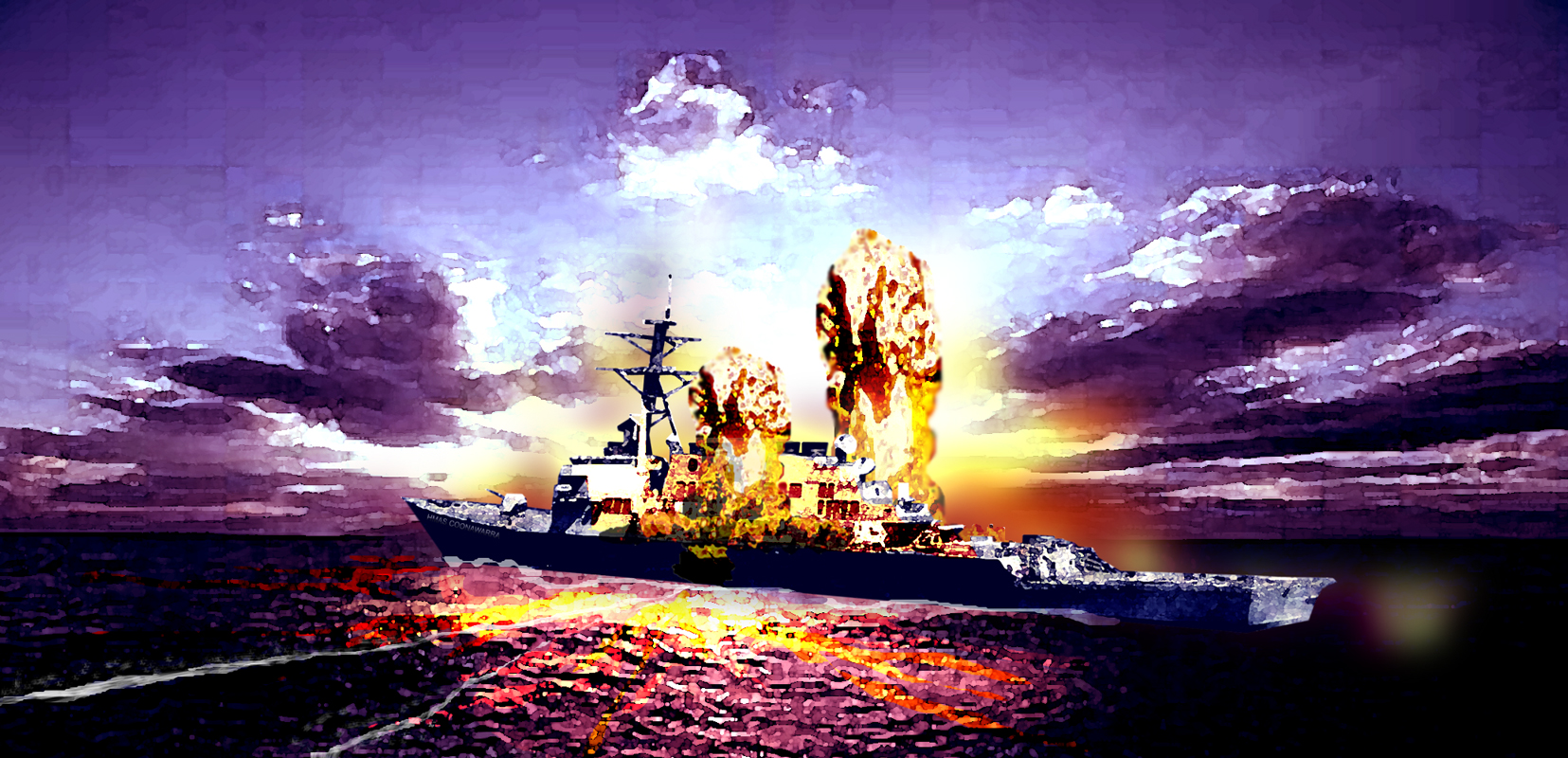
The first stanza illustrates Casabianca standing on a burning deck, but here the fire is not depicted as dangerous. Instead, the fire merely illuminates the scene. It is interesting to note that out of the four lines in the stanza, three of them mention and/or describe the fire. The next stanza describes Casabianca, using words such as “beautiful and bright”, drawing comparison to the fire from the last stanza, that “shone round him o’er the dead”. In the third stanza the fire begins to threaten, as Herman writes, “The flames rolled on - - he would not go”. Like the flames that perservered, Casabianca would not leave. Over the fourth and fifth stanzas the imagery of the fire is faded into the background, until the last line of the fifth stanza, where the fire simply rolls on. I found that the absence of the imagery that was so prominent earlier in the poem left me more worried and thinking about the flames than I would have if the imagery was present. Here, Heman draws attention to the flames by not mentioning them.
In the sixth stanza the flames are personified, and for the first time in the poem Casabianca is depicted as noticing the flames. Casabianca can feel the heat of the flames upon his brow and hair. Over the next two stanzas the flames reach their peak intensity. The flame first spreads to the sail and shroud in the seventh stanza, intensifying the feeling of despair. In the eighth stanza the fire reaches its peak, engulfing the Casabianca as he stands bravely awaiting the orders of his father. The progression of the flames throughout the poem mirrors the progression of Casabianca’s despair. The flames give the readers a way of interpreting the progression of the impending doom of Casabianca, and thus lets Casabianca remain a brave character.
Images:
Casabianca:
Design:
Diving into the wreck:


No comments:
Post a Comment